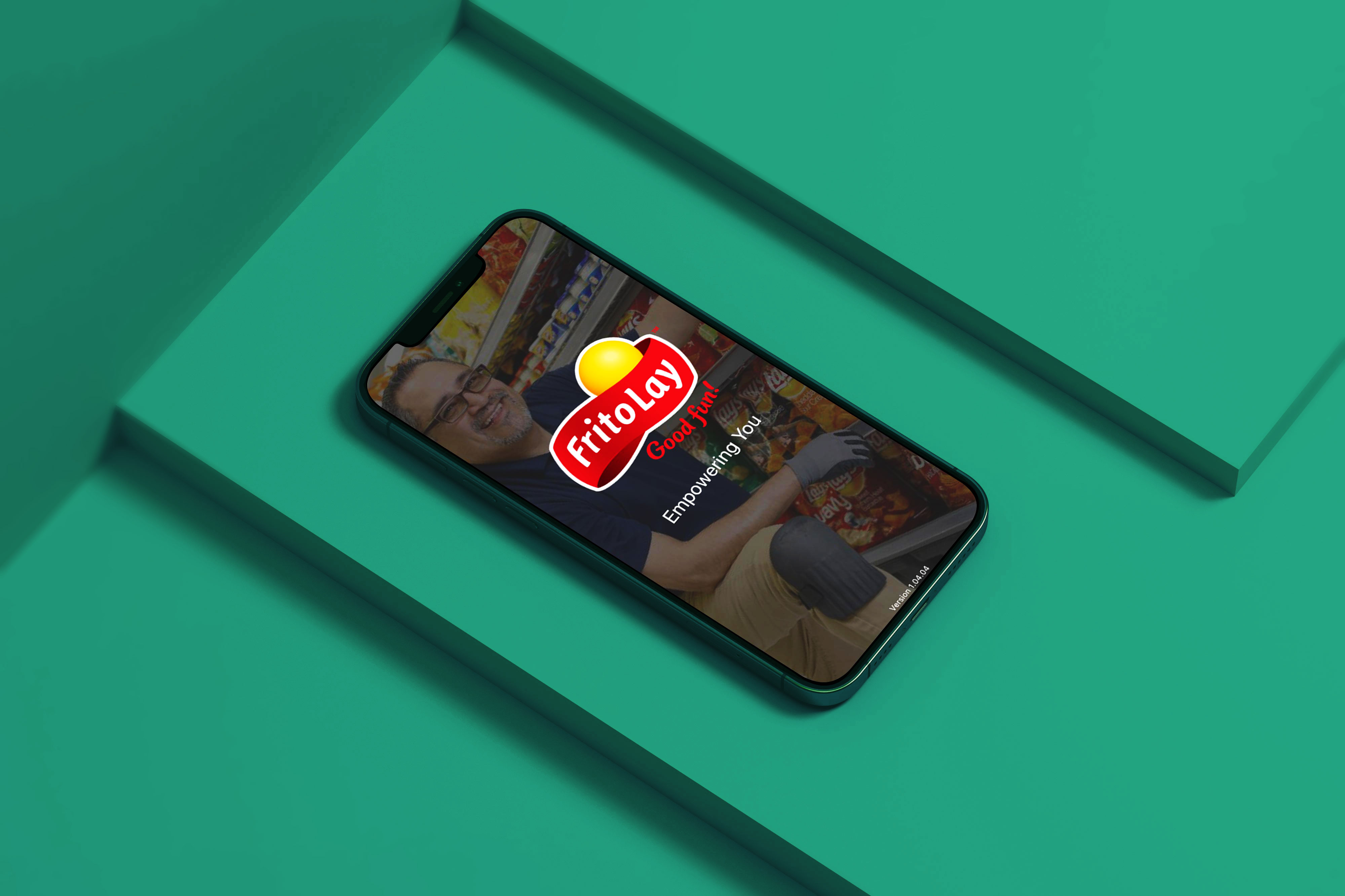
Sales Hub+ app interface

PepsiCo · IBM · Mobile App

Sales Hub+

A ground-up redesign of Frito-Lay's sales platform, rebuilding over 1,000 screens into a modern iOS experience for 25,000 employees.

Role

Senior UX Designer

Company

IBM

Client

PepsiCo / Frito-Lay

Platform

iOS

Frito-Lay's 25,000 Route Sales Representatives relied on outdated handheld scanners that made inventory, sales, and delivery tracking slow and error-prone. The legacy system spanned over 1,000 screens of disconnected workflows and inconsistent logic, forcing reps to navigate multiple systems just to complete a single delivery. This was a full redesign of that platform at scale, and it kicked off just as COVID-19 forced our entire research process remote.

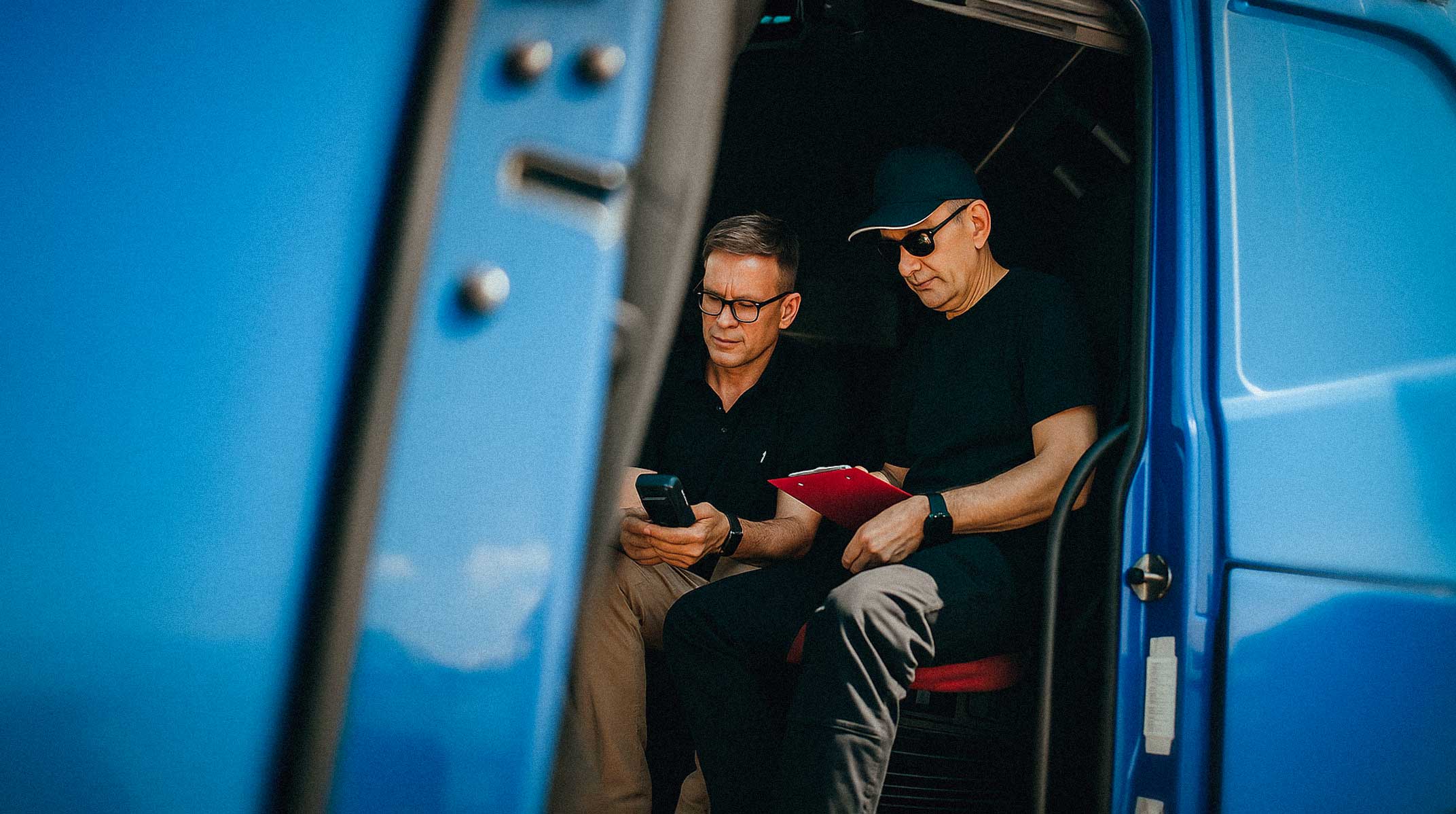
Route Sales Representatives in the field

Route Sales Representatives (RSRs) in the field, the people this redesign was built for.

I led remote interviews with RSRs across Plano, Texas and other regions, adapting our research plan for COVID-era constraints. What I expected to hear about was clunky UI. What I actually uncovered was deeper: reps had built elaborate workarounds to compensate for the system's failures. Some were keeping paper logs alongside digital entries. Others had memorized screen sequences to avoid navigating the interface altogether. These weren't power-user shortcuts. They were survival tactics.

This research directly shaped the design direction. Instead of simply modernizing the existing screen flow, I pushed to rethink the information architecture entirely, consolidating what had been fragmented across multiple back-end systems into unified task-based workflows.

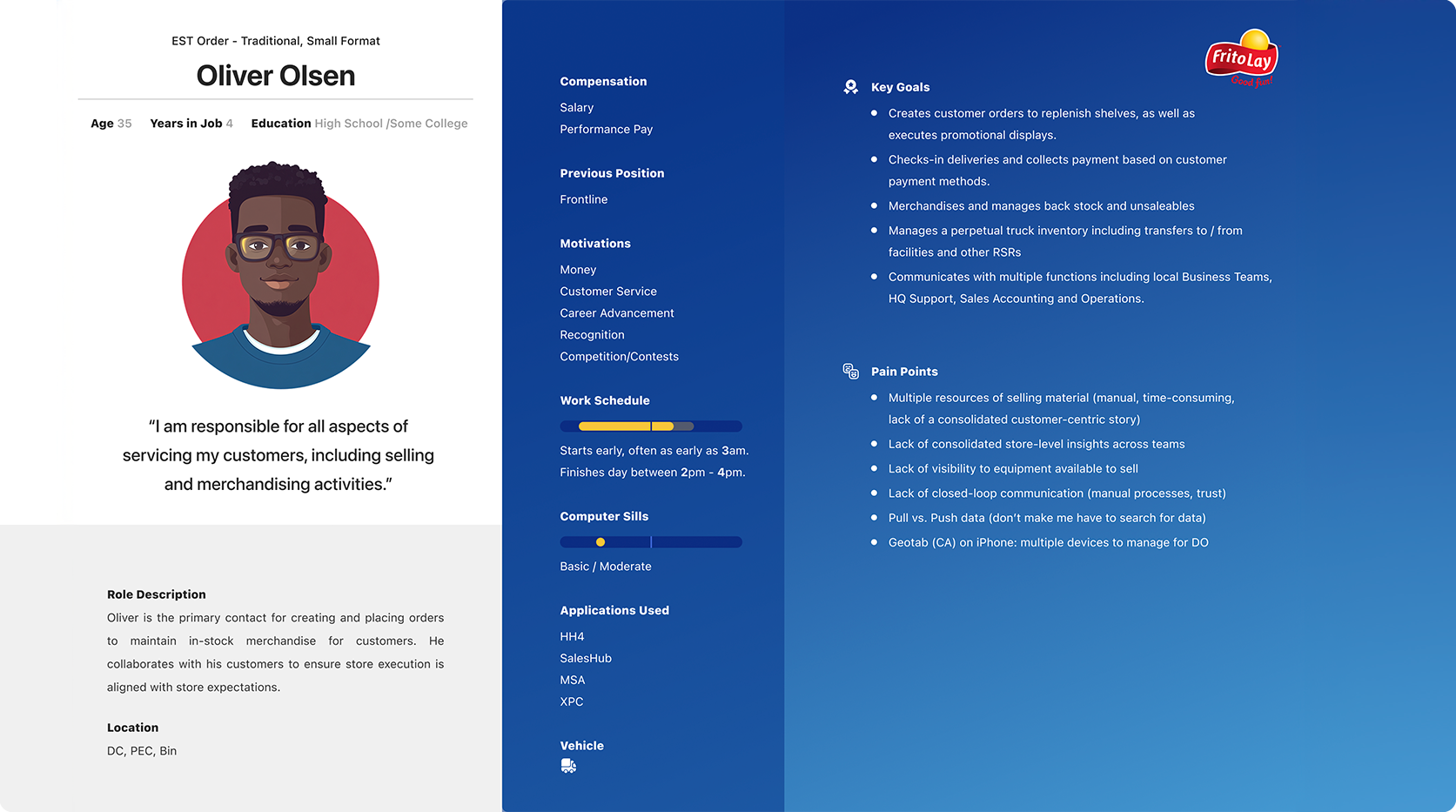
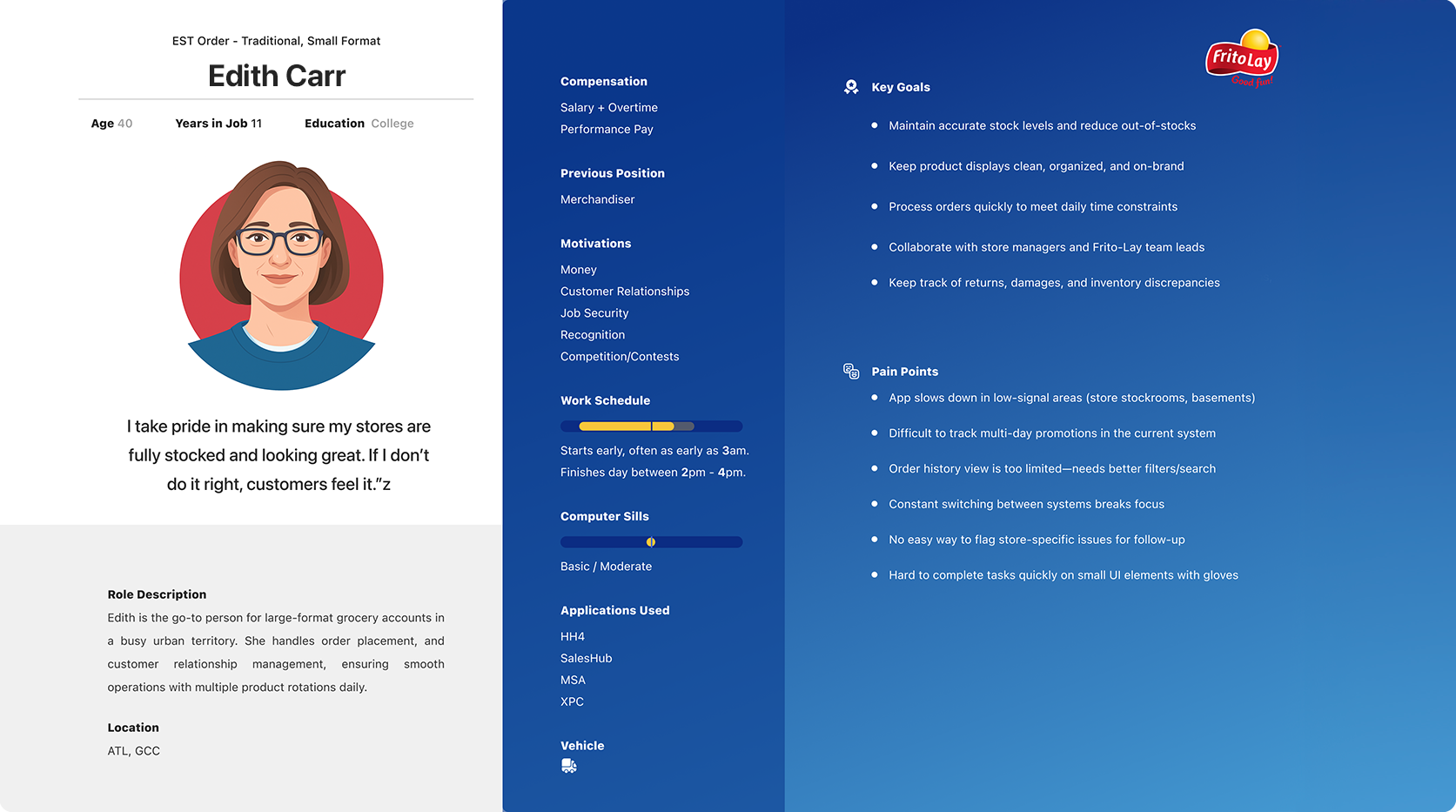
User persona for a Route Sales Representative

Two of the dozen personas I developed from research. Each captured distinct route types, store sizes, and levels of digital fluency. These differences directly influenced navigation patterns and information density in the final designs.

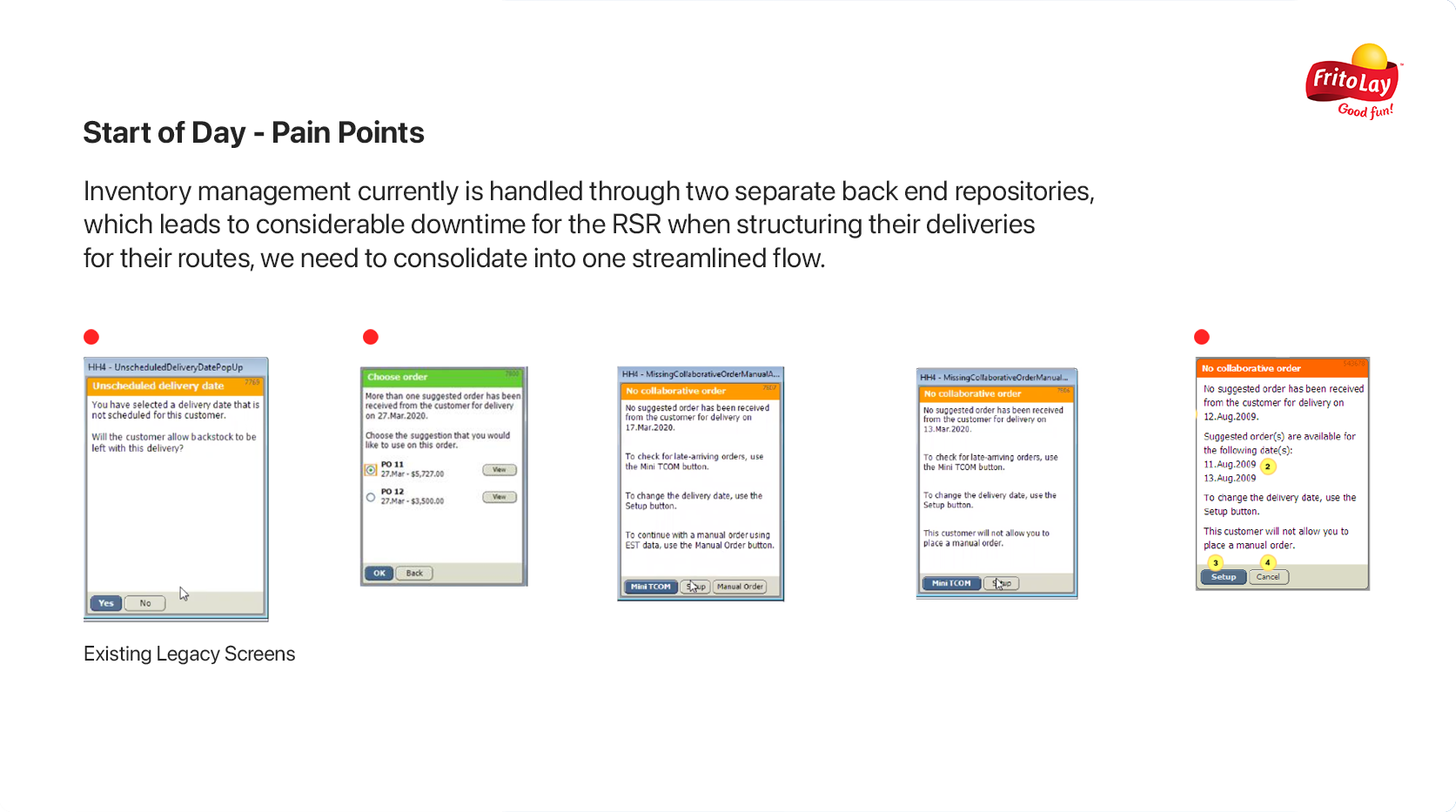
I mapped several end-to-end journeys for each persona, tracing how reps moved through their day from check-in to service completion. The mapping exposed critical friction: inventory management alone was split across two separate back-end systems, forcing RSRs to context-switch mid-delivery just to reconcile stock counts. What should have been a single workflow required jumping between disconnected screens, re-entering data, and mentally tracking state across systems.

Legacy screens showing disconnected workflows and redundant data entry

The legacy system: fragmented workflows, redundant data entry, and inconsistent patterns that cost RSRs hours each week.

On a team of five designers, I took sole ownership of the Scheduling and Service Appointment flows, a foundational part of the daily app experience that every RSR touched multiple times per shift. This meant designing the complete task flows for time tracking, inventory reconciliation, and manager approvals from scratch, not just reskinning existing screens.

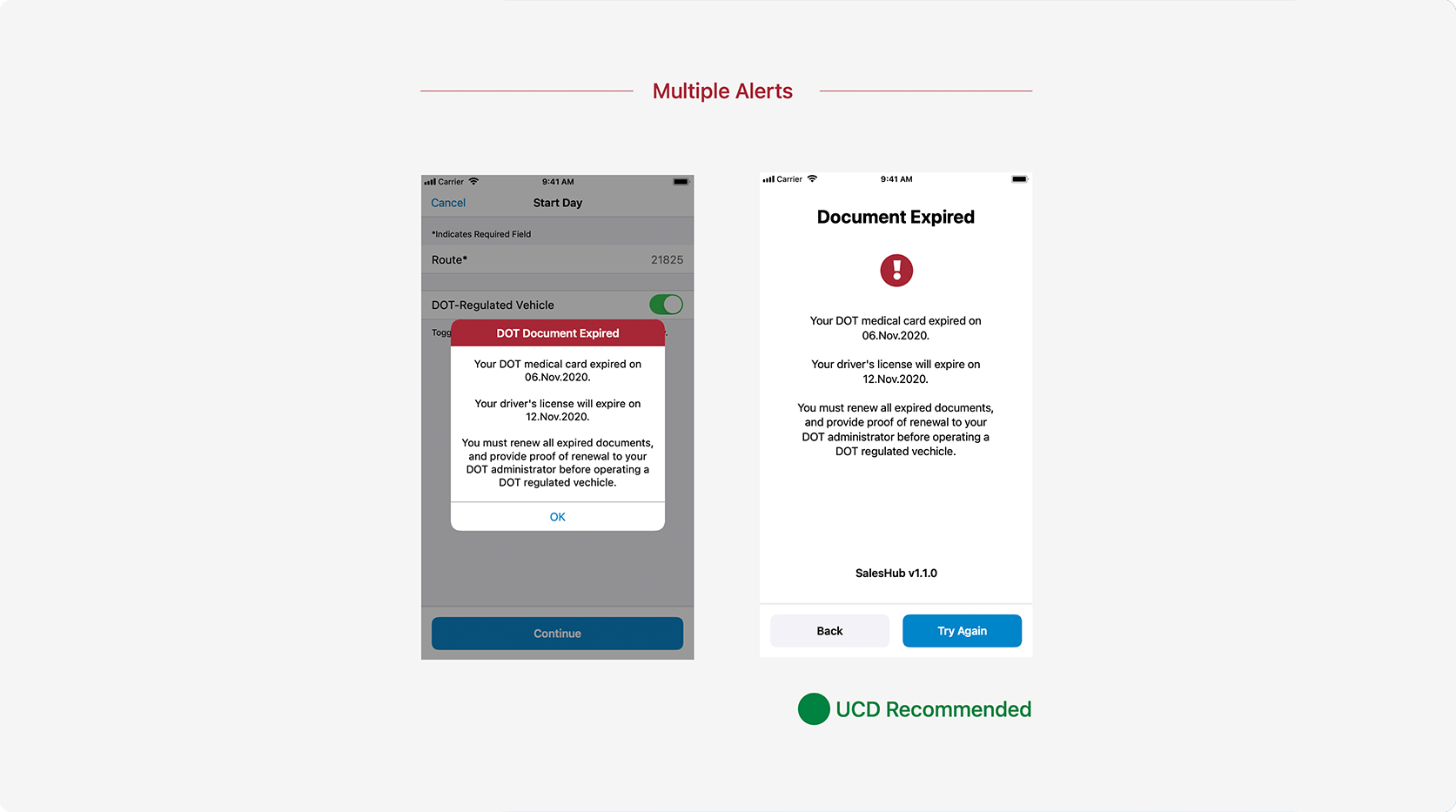
The hardest design problem I solved was the DOT notification system. The legacy app handled expiring vehicle documentation inconsistently. Some states triggered alerts, others didn't, and the notification format changed depending on the document type. Reps were missing critical compliance deadlines because the system wasn't reliable. I designed a unified, reusable full-screen notification pattern that standardized every edge case and status state into a single predictable interaction. PepsiCo leadership adopted this pattern across all verticals of the application, not just my flows.

Reusable full-screen notification pattern for DOT documentation

The unified DOT notification pattern I designed, adopted app-wide after solving inconsistent compliance alerts across all document types and states.

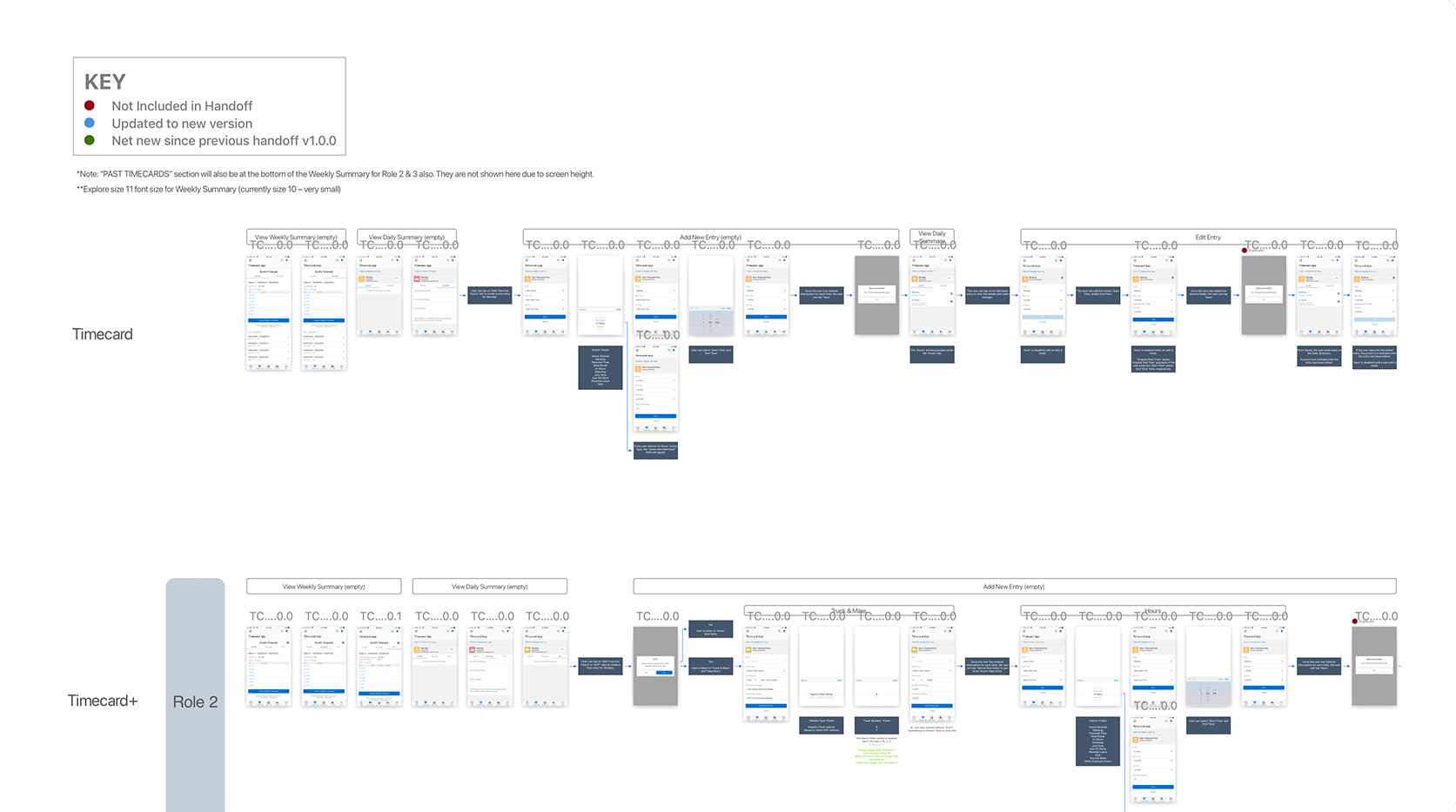
I translated each scenario into high-fidelity user flows and prototypes, syncing daily with PepsiCo leadership and cross-functional teams. These weren't rubber-stamp reviews. Stakeholders frequently pushed back on decisions that simplified the UI at the expense of edge-case coverage. The tension was always between "make it simple" and "make it complete." I learned to present tradeoffs explicitly: here's what we gain in clarity, here's the edge case we'd need to handle differently. That framing kept alignment without watering down the design.

I delivered over a dozen high-fidelity user flows and interactive prototypes across my verticals, each validated against the personas and journey maps from the research phase.

High-fidelity user flow for Sales Hub+

One of the high-fidelity flows I designed. Each flow was built to consolidate what had previously been fragmented across multiple legacy screens.

Sales Hub+ replaced the legacy system for 25,000 RSRs. The redesign consolidated over 1,000 screens into streamlined, task-based workflows, reducing the number of screens reps needed to complete core tasks like inventory and scheduling by roughly half. The DOT notification pattern I designed eliminated missed compliance deadlines by giving reps a single, reliable alert system regardless of document type. Across the app, reusable patterns I helped establish reduced design-to-dev handoff time and became the foundation for subsequent feature releases.

The work continues to support PepsiCo's digital evolution. What started as a modernization effort became a genuine transformation in how a 25,000-person workforce manages their daily operations.

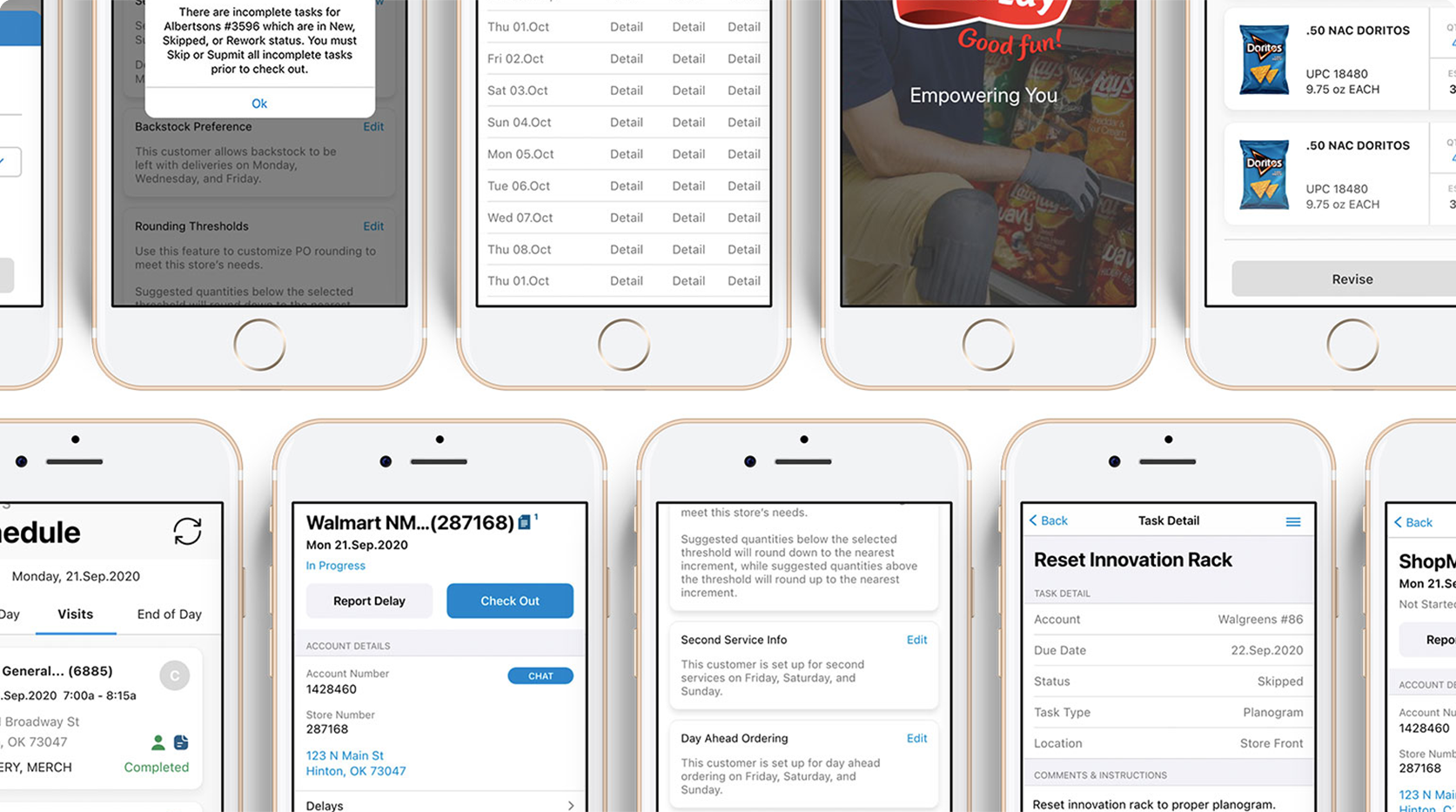
Final delivered screens for Sales Hub+

The redesigned Sales Hub+. Consolidated workflows, consistent patterns, and a modern iOS experience built for the field.

Previous Other Projects Next Builder Suite